The pyramids of Teotihuacán do not change. The experience of standing on them does — and the difference between arriving at 7 AM and arriving at noon is the difference between a profound memory and an exhausted shuffle through a crowd.
We take groups to Teotihuacán every day of the year. We have been there in the July rain, on Easter Sunday when 50,000 people showed up, and on cold February mornings when only a few hundred visitors wandered the Avenue of the Dead. This is what we have actually learned.
Time of day: the single most important factor
Sunrise (6:00 – 9:00 AM) — the undisputed best
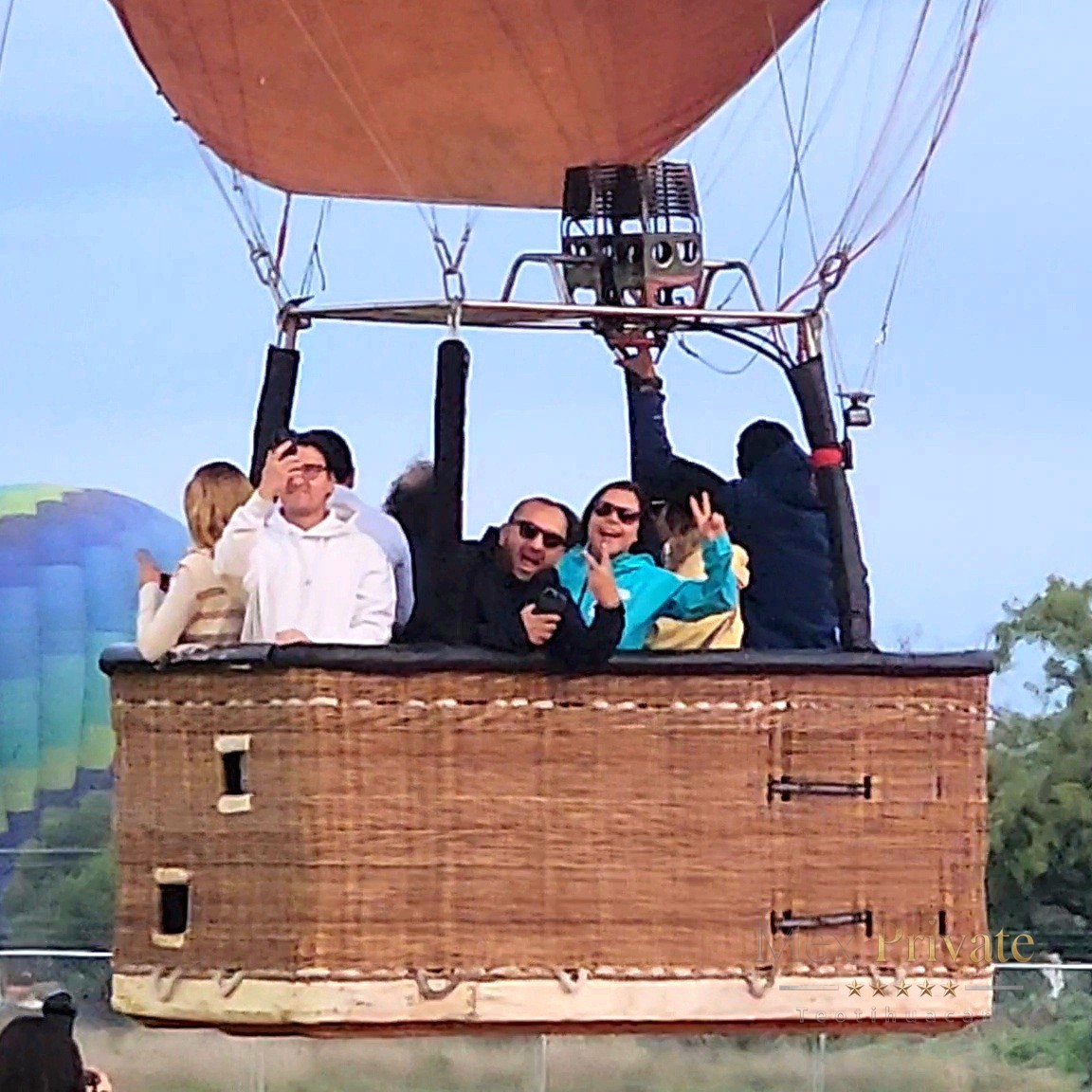
The site opens at 8 AM, but if you arrive on a hot air balloon tour you reach the launch field by 6 AM and are already in the air when the sun clears the mountains. By the time you land and reach the pyramids, the site has just opened and the crowds have not arrived yet.
The light at this hour is exceptional — warm, low, and dramatic. The air is cool (often 10–15°C cooler than midday). The Pyramid of the Sun is not yet baking. You can stand on the platforms in relative silence.
Midday (11:00 AM – 3:00 PM) — the most common mistake
This is when most day-trippers arrive by bus from Mexico City. By 11 AM, the main avenue is packed. By noon, the Pyramid of the Sun is exposed to direct sunlight with nowhere to shelter. The site has no shade. Surface temperatures on the stone reach 50°C in summer.
Midday visits are not bad — the site is always spectacular — but you will share it with thousands of other people and work much harder for the same views.

Day of the week
| Day | Crowd level | Notes |
|---|---|---|
| Monday | Low–Medium | Good option, some vendors closed |
| Tue–Thu | Low | Best weekday combination |
| Friday | Medium | Locals start arriving from CDMX |
| Saturday | Very high | Peak day, arrive before 8:30 AM |
| Sunday | High | Families, school groups common |
Month and season
Dry season (November – April) — recommended
Clear skies, cooler temperatures, and the best visibility for photos. November through February offer the coldest mornings (bring a light jacket for the pre-dawn drive). March and October sit in a sweet spot: dry, warm, and not overwhelmingly crowded.
Spring Equinox (March 21): avoid unless you want to experience Teotihuacán at its absolute maximum capacity. Tens of thousands of people gather to "absorb energy" at the Pyramid of the Sun. A remarkable spectacle — and a logistical nightmare.
Rainy season (May – October)
Rain usually falls in the afternoon, so morning visits are often perfectly clear and much cooler. July and August are the wettest months, but a sunrise or early-morning visit typically happens in dry conditions. Bring a lightweight rain jacket if you are visiting in the afternoon during these months.
See the pyramids before the crowds do.
We pick you up at 4:45 AM and have you at the site when it opens — private transport, small group, your schedule. Balloon sunrise optional.
Quick answers
Information accurate as of June 2026. Site hours, crowd patterns, and access rules are subject to change by INAH.